
Ah, handwriting! A rite of passage as a kid and a staple of childhood education – until recently, that is. In the past few decades, handwriting instruction (especially cursive handwriting) has been pushed aside with the rise of digital learning and technology skills.
But good news! There’s been a renewed focus on teaching handwriting to kids, as more studies highlight the importance of handwriting in early education and brain development.
So what does this mean for homeschooling parents?
Parents are left wondering:
- Should I teach handwriting in our homeschool?
- What are the benefits of teaching handwriting to children?
- How important is handwriting instruction?
- Should I teach both manuscript and cursive?
- What age should kids learn handwriting?
- What are the best handwriting workbooks for kids?
Let’s take a look.
What the Research Says About Handwriting
Here’s the bottom line: handwriting instruction in the early years is foundational, not optional.
Handwriting is an essential skill for:
- Taking notes
- Completing classwork
- Test-taking
- Supporting overall cognitive development
In a recent study, Eva Ose Askvik and her team concluded that children “must be exposed to handwriting and drawing activities… to establish the neuronal patterns beneficial for learning.”
Why Teaching Handwriting to Kids Matters
Does handwriting instruction really matter? Yes! After all, young children are just learning to read and write. They need to connect:
- Letter formation
- Letter sounds
- Letter names
Handwriting connects reading, spelling, and writing through motor and sensory input in ways that literally rewire the brain for learning. It helps new learners make sense of the things they are learning across academic subjects.
Plus, it’s one of the rare activities that effectively reaches all four learning styles of kids.
Benefits of Handwriting Practice
In addition, handwriting practice is good for kids in several other ways:
- Literacy skills: improves letter recognition, phonics, and spelling
- Cognitive development: enhances memory and focus
- Fine motor skills: builds coordination and muscle memory
- Stronger readers and writers: supports fluency and composition
- Future academic success: linked to reading and spelling achievement
No wonder families are rediscovering the value of daily handwriting practice!
Where Handwriting Fits in Your Homeschool Day
One of my favorite things about homeschool handwriting practice is how simple it is to include.
It doesn’t have to be complicated or even occur every day. In fact, many homeschool families do handwriting only 2-3 days a week.
In the early years, handwriting is generally parent-modeled because students need to learn correct letter formation. But before long, it becomes a calm, independent activity!
And while I’m not usually a workbook person… handwriting workbooks are the exception. This is one area where workbooks are key.
Why Handwriting Workbooks Work
- Build independence
- Show clear skill progression
- Easy to pick up and put down
- Quick & easy for moms to check
In our home, we sandwich a 5–10 minute handwriting practice between tougher subjects like math and reading several days a week. The rhythmic motions act like a beautiful calming brain break and offer welcome quiet and rest.
Manuscript Handwriting for Beginners (K–2)
Although there are different schools of thought about beginning with manuscript versus cursive, most parents teach manuscript handwriting first.
One big advantage to teaching printed letters first is that kids learn to form letters in a way similar to what they see in print – an important concept for beginning readers. Plus, manuscript is generally considered easier.
Manuscript is Best for:
- Kids learning letter sounds & ABCs
- Beginning writers (K–2)
- Early readers
- Children developing fine motor skills
What to Look for in a Manuscript Workbook
- Clear letter formation
- Age-appropriate line size
- Gentle repetition
- Simple, uncluttered pages
- Kid-friendly design
- Colorful & Engaging
How to Teach Handwriting: Pencil Grasp
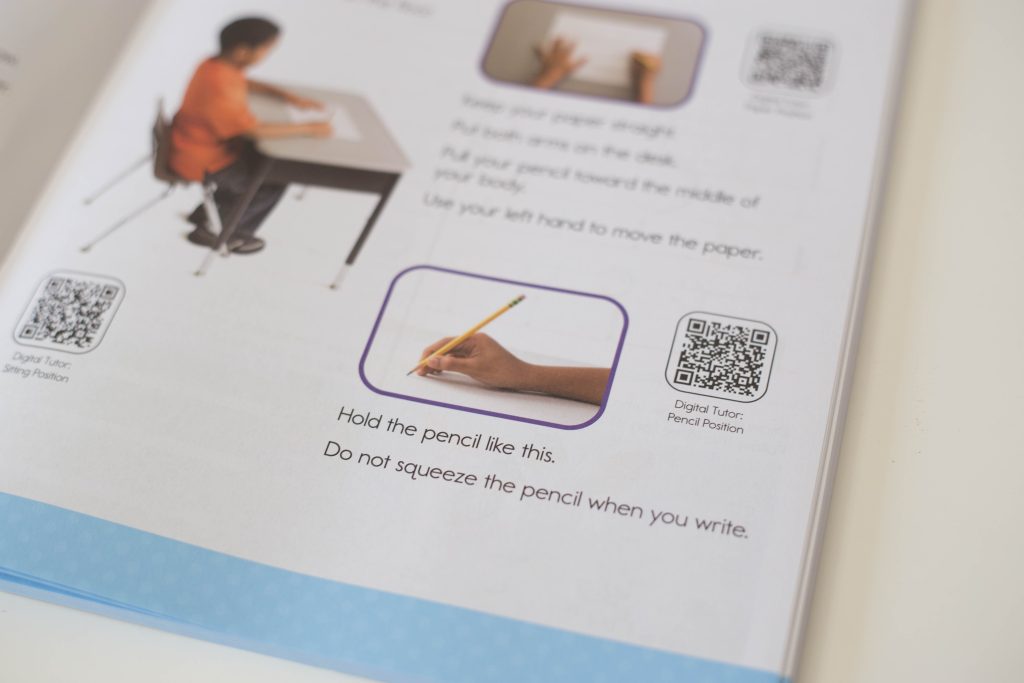
First, before beginning handwriting, new little learners need to be taught proper pencil grip!
The correct grasp:
- Pencil between thumb and forefinger
- Resting on the third finger
The Crocodile Trick 🐊
I like to teach kids this little trick – Use your forefinger and thumb to be a tiny crocodile. Open and close the crocodile mouth then say:
“Chomp! Chomp! goes the crocodile… until he bites a pencil. Crunch!”
Now, he can sit down and rest on a log (the 3rd finger).
This cute little story, accompanied by the hand motions, helps new learners remember the correct pencil grasp every time in a fun, memorable way.
Teaching Letter Position and Writing Lines
Kids learning to write need to first understand directionality – that we read and write left to right and top to bottom. But for some early childhood learners, those can be new concepts all together.
So before teaching writing, make sure kids understand the position words like these:
- Top
- Middle
- Bottom
- Left
- Right
This will make handwriting easier!
At this stage, most handwriting programs provide guidelines for letters. So before getting started, take a moment to point out the bottom line (often red), the dotted mid-line, and the top line (often blue).
To make it fun, have your child stand up and touch their head (top), waist (middle), and toes (bottom). Add in twisting to the right and left – and they’ll have directions down in no time!
These positions are important for kids to understand the proper hand motions for correct letter formation.
Using large movements (touching head, waist, toes) makes this multi-sensory and memorable!
Highlights Manuscript Handwriting Workbook Review
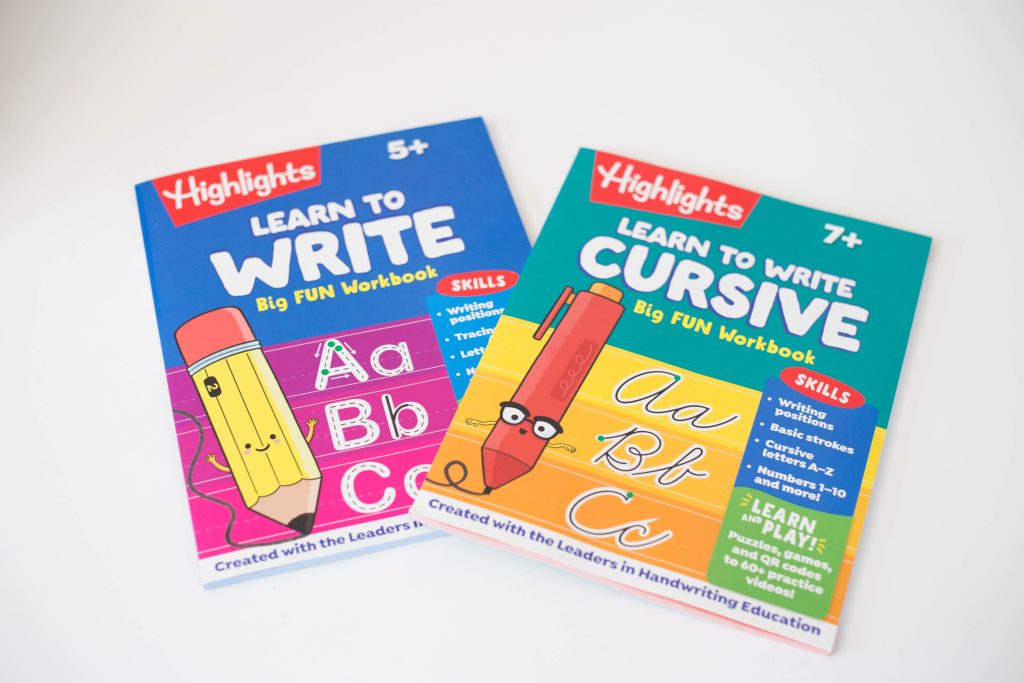
Disclosure: I received these Highlights handwriting workbooks for consideration. All opinions are my own. This page may contain affiliate links, including Amazon affiliate links. As an Amazon Associate, I earn from qualifying purchases at no extra cost to you. Thank you for supporting my family!
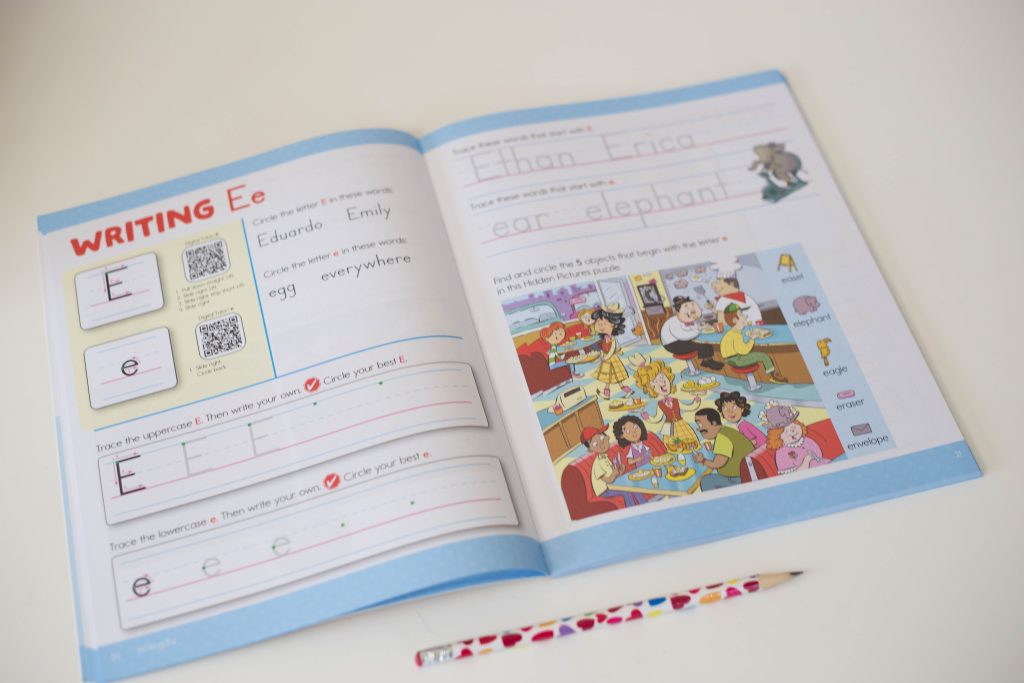
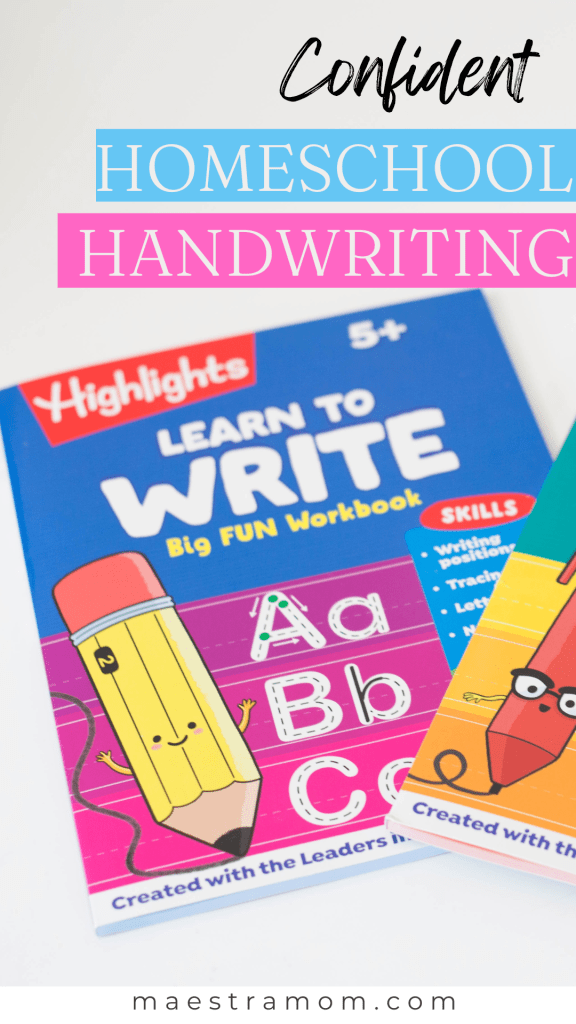
I recently used the Learn to Write! Big Fun Workbook by Highlights, and it’s a fabulous introduction to beginner handwriting for kids ages 5-7.
The first thing I noticed was how they dedicated an entire page to writing positions and correct pencil grasp so kids and parents would get it right. Yay!
Secondly, I loved that Highlights utilized the Zaner-Bloser method of handwriting that embraces crisp, straight lines in a block print that has become the gold standard of primary grades handwriting. As a pre-k and kindergarten teacher for many years, I can attest that this is the easiest and most standard font for beginning writers to learn.
But there are other features I really like as well.
What I Love about Highlight’s Learn to Write! Big Fun Workbook
- Bright and colorful, but not overwhelming
- Clear pencil grasp instruction
- Color-coded writing lines
- Large letters for beginners
- ABC chart included
- Combines penmanship with phonics & vocabulary
- Puzzles and games make it fun!
- Covers letters and numbers
- Plenty of practice pages
- Progression in A-Z order
- Includes numbers 1-10
- Beginning letter sounds and words
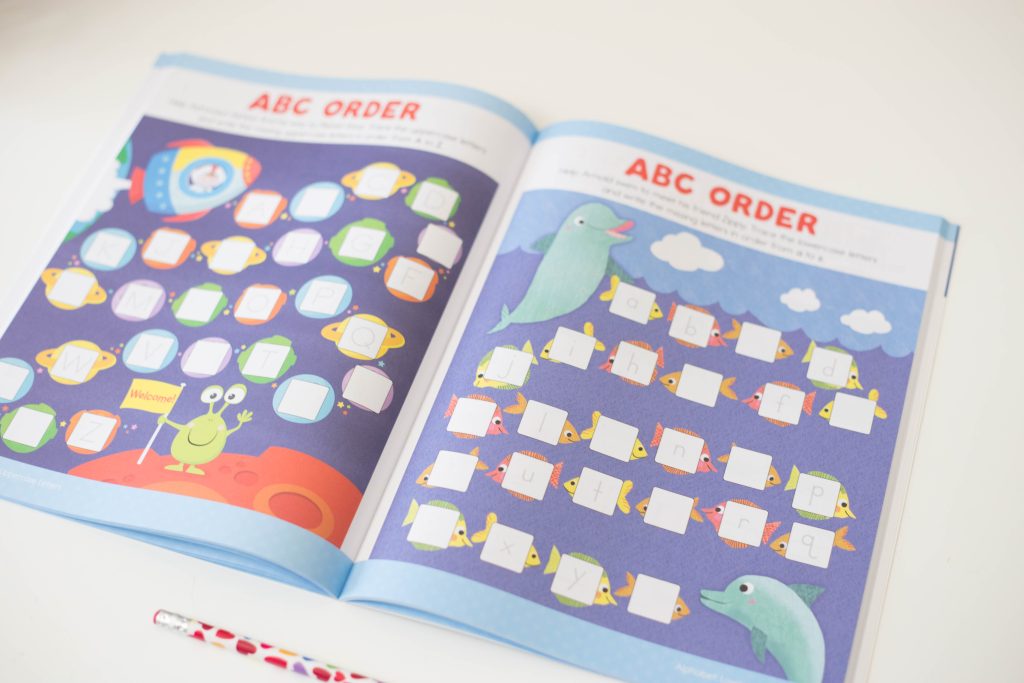
Stand-Out Features
QR codes for every letter
Each letter includes a QR code link to a super quick (under 30 seconds) video modeling correct letter formation. I love this feature because kids need to see handwriting modeled in order to imitate proper hand motions. And for homeschool families, this feature makes it super easy for kids to learn proper technique independently – visually, auditorily, and kinesthetically.
Classic Highlights puzzles (so fun and nostalgic!)
The puzzles and activities included on every other page bring back so many fun memories of Highlights magazines I grew up on as a child! I loved them back then – and now my kids do, too. Including the puzzles makes each page fun – and not tedious.
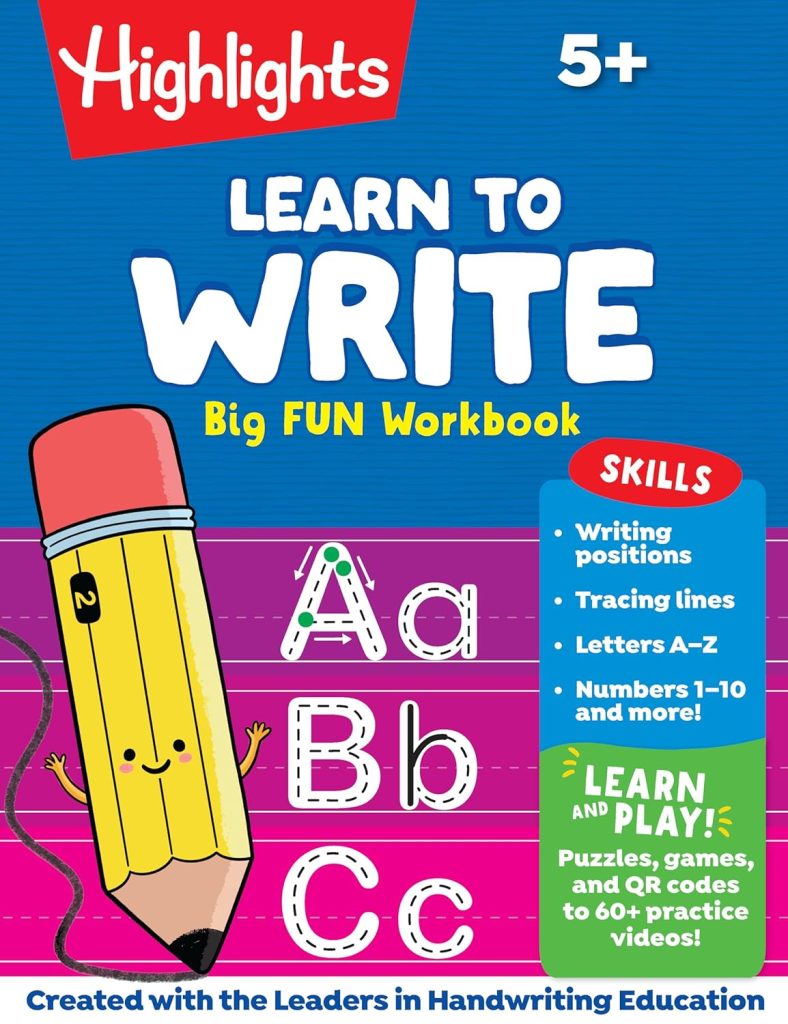
Highlights Learn to Write: Big Fun Workbook
Includes 110+ pages of step-by-step beginning handwriting instruction for new learners ages 5-7 combined with joyful, playful puzzles and activities to make learning delightful.
When Should Homeschoolers Start Cursive?
There’s no magic age for beginning cursive handwriting instruction. However, most children begin cursive handwriting around:
- 3rd grade
- Continue through 5th or 6th
Some start earlier, such as the beginning of 2nd grade, if ready.
There’s no rush, but there is a right season – and for most families that’s when a child has shown mastery over manuscript writing.
Why Cursive Handwriting Still Matters
Writing in cursive involves many brain systems and sensory input. The slower pace of writing by hand enables children to deliberately organize their thoughts and pay close attention to grammar and mechanics in a way that cannot compare to typing on a device.
Cursive supports:
- Better idea organization
- Stronger focus & attention
- Improved reading fluency
- Deeper cognitive engagement
It’s also a cultural skill, allowing students to read historical documents as primary sources and family history – or maybe even a letter from grandma!
Teaching Cursive Handwriting at Home
Recently, my 2nd grader was trying as hard as she could to add loops and flourishes to her name then proudly told me she had discovered how to write in cursive! I smiled – and wondered if she might just be ready to start her cursive journey!
Students often get excited about cursive and are eager to learn this mysterious script.
But they still need:
- Direct instruction
- Clear modeling
- Step-by-step practice
Without that support, confidence can dip.
Highlights Cursive Workbook Review
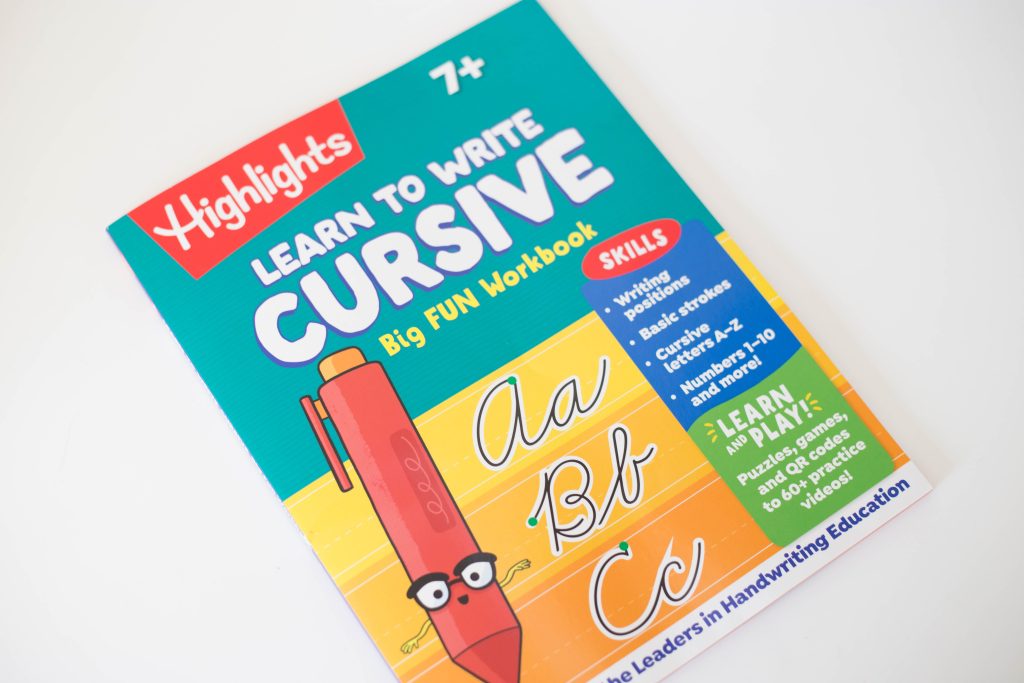
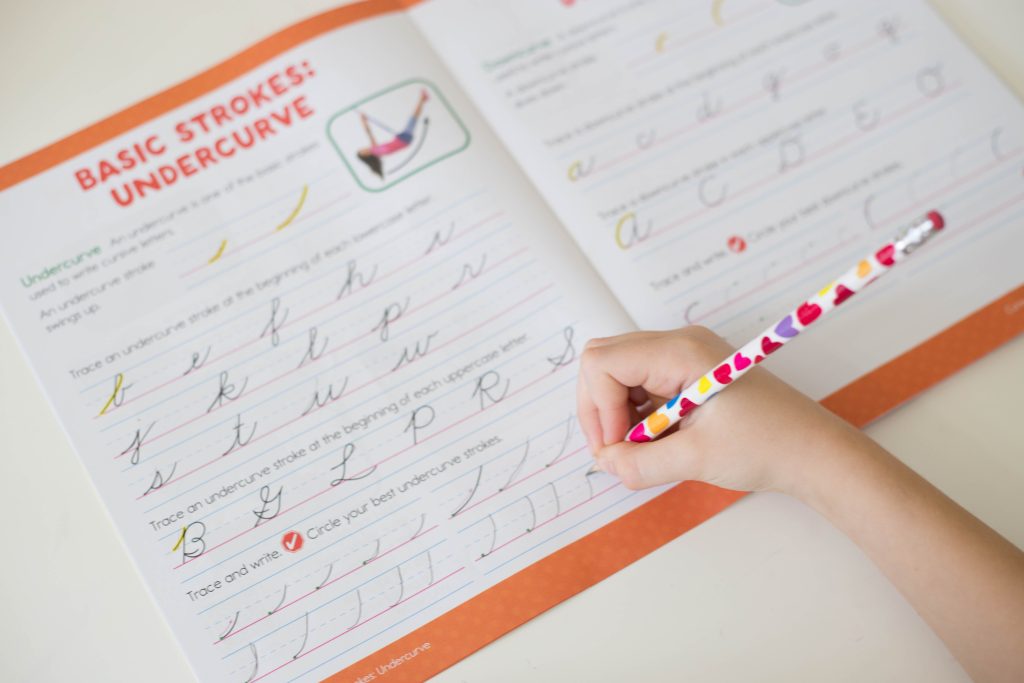
The Learn to Write Cursive: Big Fun Workbook by Highlights is a natural next step – and exactly where I started with my own daughter.
Features
- 60+ QR code video lessons
- Clear instruction and progression
- Slightly more mature design & smaller lines
- Practice with letters, words, and sentences
- Fun puzzles throughout
- Progression in A-Z order
- Includes numbers 1-10
- Colorful, but not overhwleming
- Combination manuscript + cursive ABC chart
Just as in the manuscript version, each letter includes guided handwriting practice – on-page and in video format through the QR codes. This meant my daughter could easily understand the proper technique and make sure she was doing it correctly!
I also loved the clear design, slightly smaller guidelines, and engaging activities. She did, too!
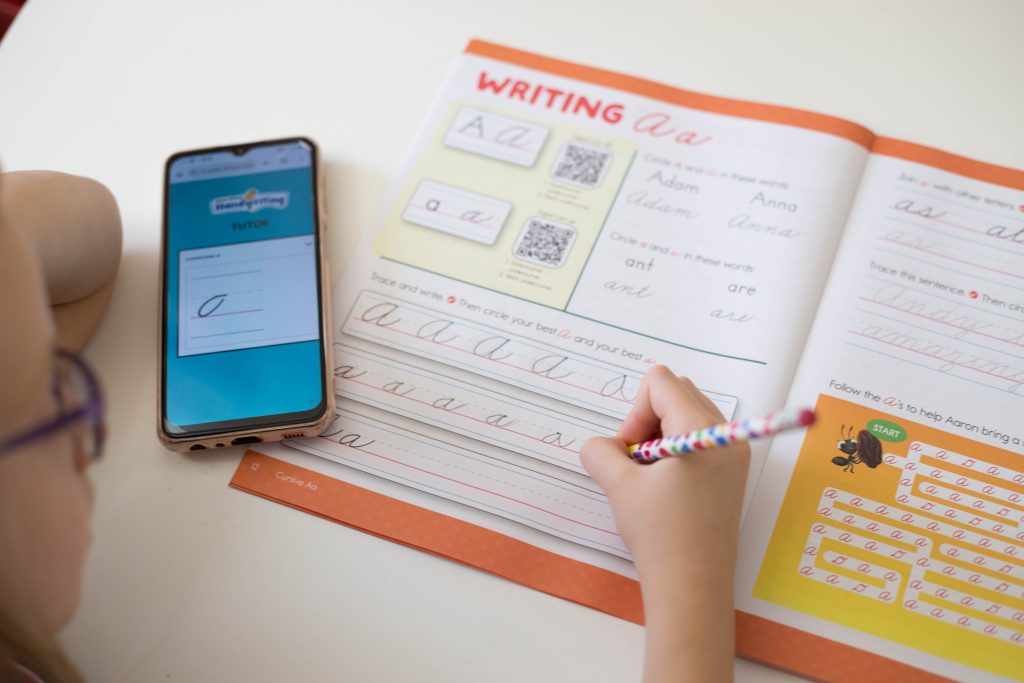
Stand out features
Another of my favorite features is the abundance of open-ended pages at the end of the book for each letter that gives parents and teachers latitude for creative use.
We paired these with my ABC Bible Memory verses where I had my kids write the ABC scriptures in cursive, combining handwriting time with Bible.
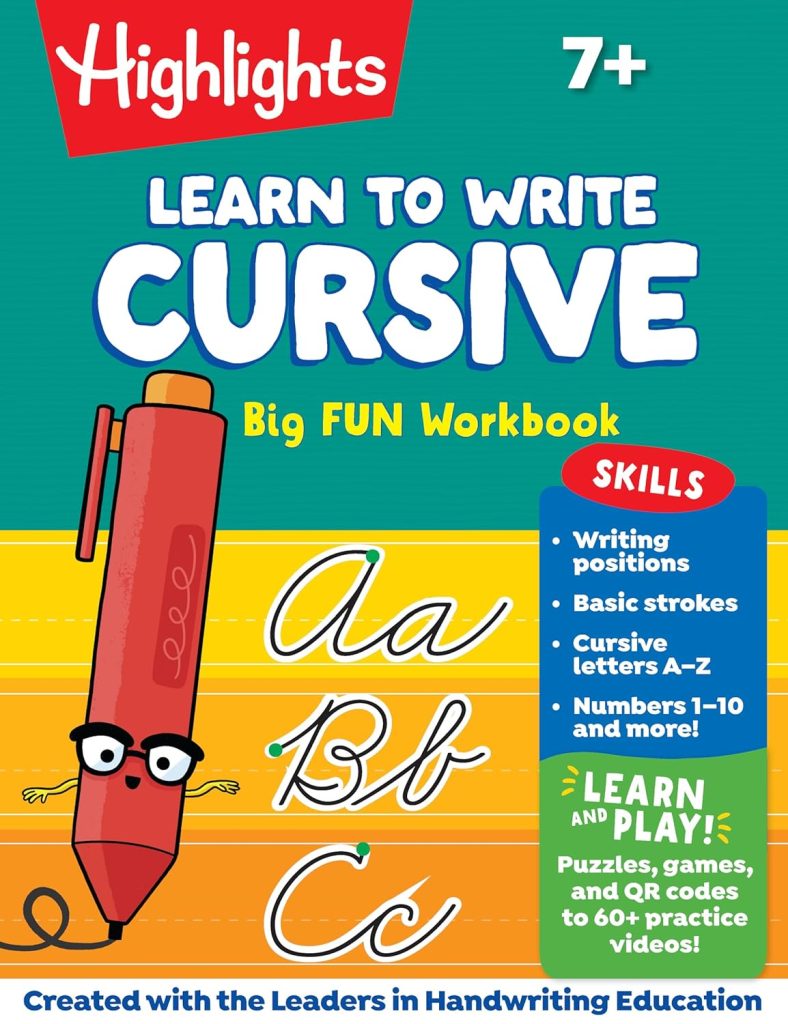
Highlights Learn to Write Cursive: Big Fun Workbook
Over 110+ pages of step-by-step instructions combining Zaner-Bloser handwriting skills with Highlights’ signature puzzles and games for kids in a way that makes learning cursive joyful and engaging.
How We Use These Handwriting Workbooks in Our Homeschool
- 5–10 minutes short daily practice
- Paired with Bible verse copywork
- Calm and consistent routine
- Independent, quiet practice time
A Simple Homeschool Handwriting Plan
Handwriting is a truly important, foundational piece of any child’s education – and the good news is that is doesn’t require much time in your day. Just consistency.
- K–2: manuscript handwriting
- 3–5: cursive handwriting
- Short, daily lessons 2-4 days each week
- Steady, gentle progress
Why Highlights Works for Homeschool Families
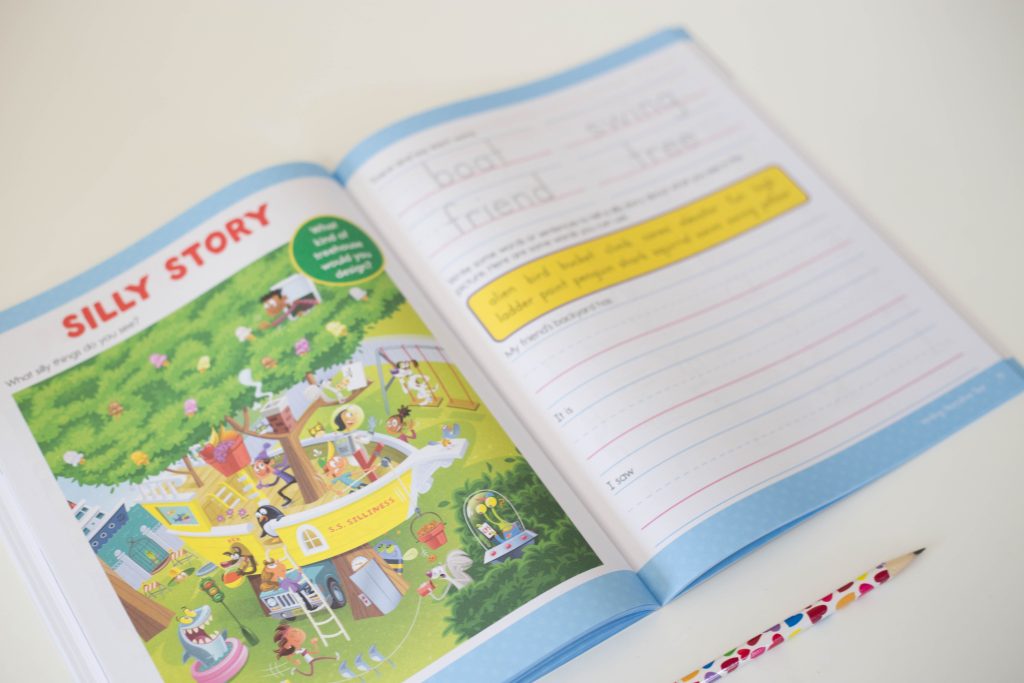
I grew up loving Highlights – and now my kids do too!
Highlights is a trusted brand that’s been around for decades and knows how to get and keep a child’s attention! Their materials are:
- Engaging
- Age-appropriate
- Designed for independent learning
- Clear and easy to understand
Highlights’ handwriting workbooks hit at just the right maturation level for each age group and foster the independent learning that homeschooling families hold so dear.
Final Thoughts on Teaching Handwriting in Your Homeschool
Handwriting is a foundational skill that shouldn’t be overlooked. But it also doesn’t need to be overwhelming!
With the right tools and a gentle rhythm, handwriting can become one of the most calm and consistent parts of your homeschool day.
If you’re looking for a simple way to keep your kids learning and engaged (without more screen time!), I’ve truly loved using these resources from Highlights.
They’ve been such a calm but joyful addition to our day!
You can explore more learning resources like these right on the Highlights website.
And if you’re looking specifically for the Learn to Write Big Fun Workbook or the Learn to Write Cursive Big Fun Workbook, you can find them on Amazon here: